

Clear, concise specifications (or “specs”) are critical to the success of construction projects. However, even the most experienced project managers can fall prey to the pitfalls of ambiguous language, leading to costly delays and misunderstandings.
Specifications Writing and Development (SWD) is an online course designed to empower project designers and managers to write precise, actionable, compliant specs, ensuring fewer errors and smoother project execution.
The Challenge
Spec writing is a complex task that requires in-depth knowledge of a project. The special provisions designers write become part of a legally binding contract. Failure to specify exactly what is needed can lead to project delays, misaligned expectations, and legal disputes.
Teaching writing via an electronic format posed an additional challenge. Designers needed a course that not only provided the basics but also offered practical feedback for real-world situations.
The Solution
The Specifications Writing and Development (SWD) course walks learners through the three critical stages of specification writing: Create, Refine, and Submit. By combining real-world scenarios with interactive activities, the course teaches learners how to:
- Create a specification package by selecting the right standard and project special provisions.
- Refine the draft by handling conversations with specialists, completing key worksheets, and applying industry writing guidelines.
- Submit the specification after a final review, using a self-assessment rubric and expert feedback.
The course itself models best practices for avoiding ambiguity, proper language use, and clear, rigorous writing.
The Process
Collaboration with Subject Matter Experts (SMEs):
As source material was limited, we worked closely with industry experts, who provided invaluable insights into the specification-writing process, helping us create scenarios that mirror the day-to-day work of designers.
Designing for Interactivity:
The course was built using an interactive, non-sequential structure. This structure allowed learners to explore content in a flexible, personalized way—mimicking the actual process of spec writing. We used tutorials, worksheets, and document reviews to engage learners and reinforce key lessons.
Challenges & Iterations:
Early feedback highlighted the need for clearer decision pathways and more practical examples. We refined the course based on this feedback to strike the right balance between theory and hands-on practice.
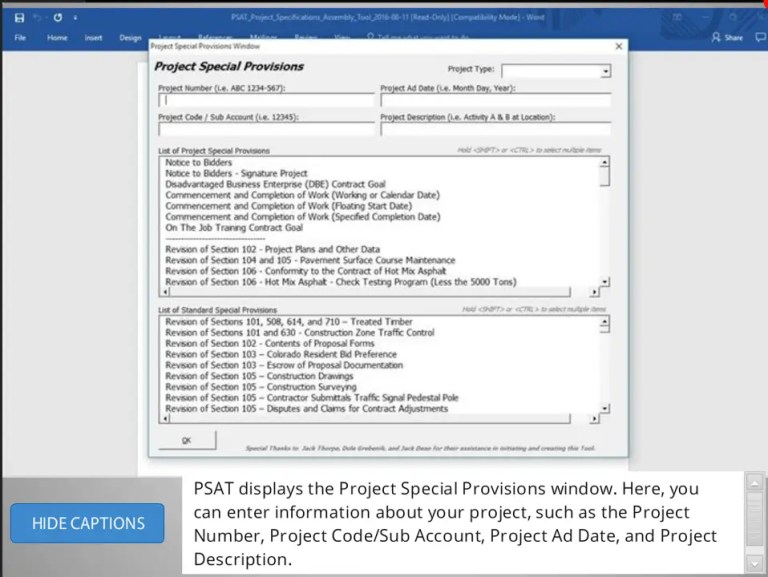
Below, you can scroll through sample screens.




The Outcome
Upon completing the course, learners reported greater confidence in their ability to write precise, enforceable specs. Feedback showed that learners were not only able to apply the skills and strategies taught in the course, but also felt more equipped to identify and resolve ambiguities before they caused problems. The course’s interactive, scenario-based design was particularly praised for providing practical, hands-on experience.
Industry SMEs were impressed by the course’s practical approach, noting that it effectively mirrored the real-world specification-writing process and provided designers with tangible, actionable skills. The scenario-based design allowed learners to make decisions in a controlled environment, improving their problem-solving abilities.
Key Takeaways
The most significant takeaway was the importance of providing learners with a flexible, real-world learning experience. By engaging learners in scenarios that mirrored their actual tasks, we helped them build critical decision-making skills.
Using expert knowledge to craft realistic, decision-driven scenarios was key to the course’s success. It provided learners with direct, practical applications of the principles they were learning.
Unexpected Challenges: The initial design didn’t fully anticipate the need for interactive self-assessment at every stage. This was addressed through iterative feedback, which led to the inclusion of a final self-assessment checklist for learners to evaluate their work.